Engineers and technical professionals in electronics, automotive, new energy, medical devices, and outdoor equipment often face the challenge of protecting sensitive components from moisture, dust, and pressure changes while maintaining reliable performance. Expanded polytetrafluoroethylene (ePTFE) membranes provide a proven, high-performance solution for protective venting and breathable barriers. This guide explains exactly what ePTFE membranes are, how they work, their key properties, and practical uses across industries.
What Is an ePTFE Membrane?

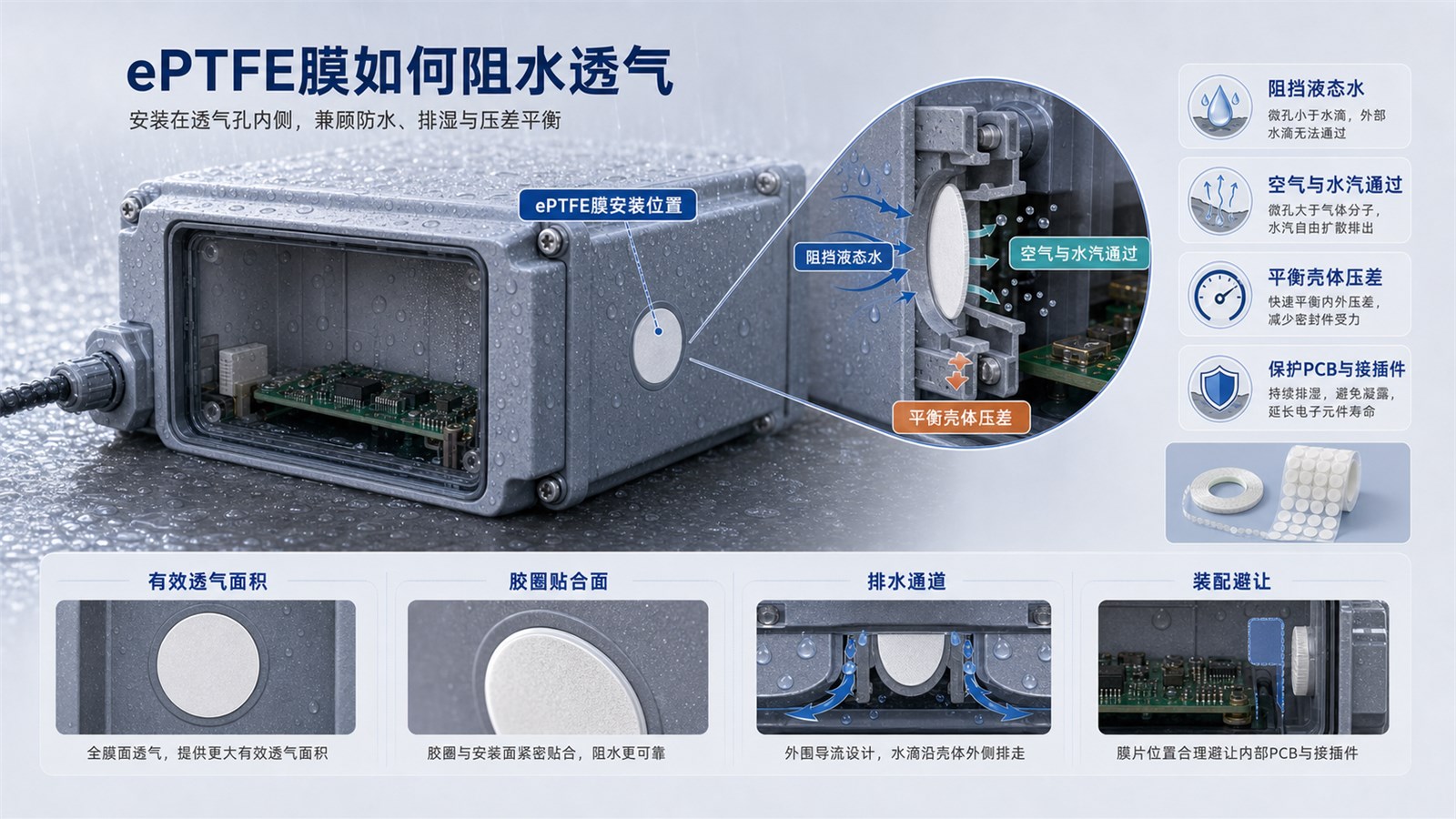
ePTFE is a microporous form of polytetrafluoroethylene (PTFE), commonly known as Teflon. It is created by rapidly stretching PTFE under precisely controlled temperature and speed conditions. This expansion process transforms the solid PTFE into a unique node-and-fibril structure containing billions of microscopic pores per square centimeter. The resulting membrane is thin, flexible, and chemically identical to standard PTFE, but with the added ability to allow controlled passage of air and water vapor while blocking liquids and particulates.
How ePTFE Membranes Are Manufactured
The manufacturing process begins with high-purity PTFE resin that is extruded into a thin film. The film is then expanded in one or more directions at high speed while being heated. This creates the distinctive node-and-fibril microstructure that gives ePTFE its unique combination of breathability and barrier performance. Pore size, porosity, and thickness are carefully engineered to meet specific application requirements. At Spider(Xiamen) Technology Co., Ltd, our polymer materials R&D team—composed of master’s and doctoral-level scientists—continuously refines this process, investing 5 %–20 % of annual revenue into new product development and performance optimization.
Key Properties of ePTFE Membranes
ePTFE membranes combine several critical technical characteristics:
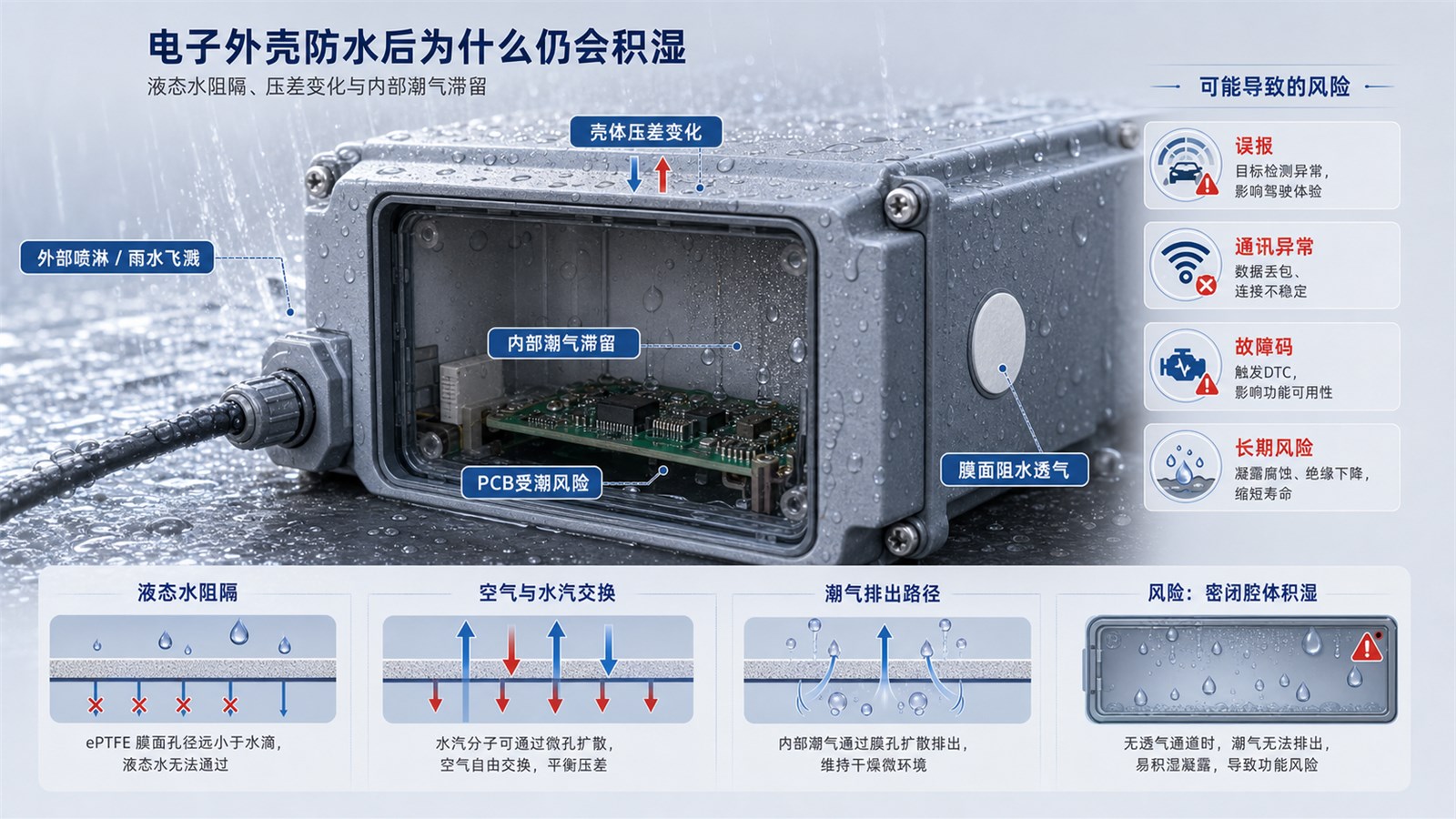
- Microporous breathability: Pore sizes are orders of magnitude smaller than water droplets yet large enough for air and water vapor to pass through, enabling pressure equalization without compromising protection.
- Hydrophobic and oleophobic nature: The membrane naturally repels water and oils, providing reliable liquid barrier performance.
- Chemical inertness: It resists nearly all acids, bases, solvents, and corrosive substances.
- Wide temperature range: Stable from approximately –200 °C to +260 °C, with excellent performance under thermal cycling.
- Low dielectric constant and high UV resistance: Ideal for electronics and outdoor applications.
- Mechanical durability: Maintains structural integrity under vibration, flexing, and repeated pressure changes.
These properties make ePTFE membranes uniquely suited for demanding environments where traditional seals or non-breathable materials would fail due to condensation or pressure differentials.
Practical Uses Across Industries
ePTFE membranes are widely adopted wherever enclosures must breathe while remaining protected:
- Electronics and LED lighting: Vents protect sensitive circuitry from humidity and dust while allowing heat dissipation and pressure relief.
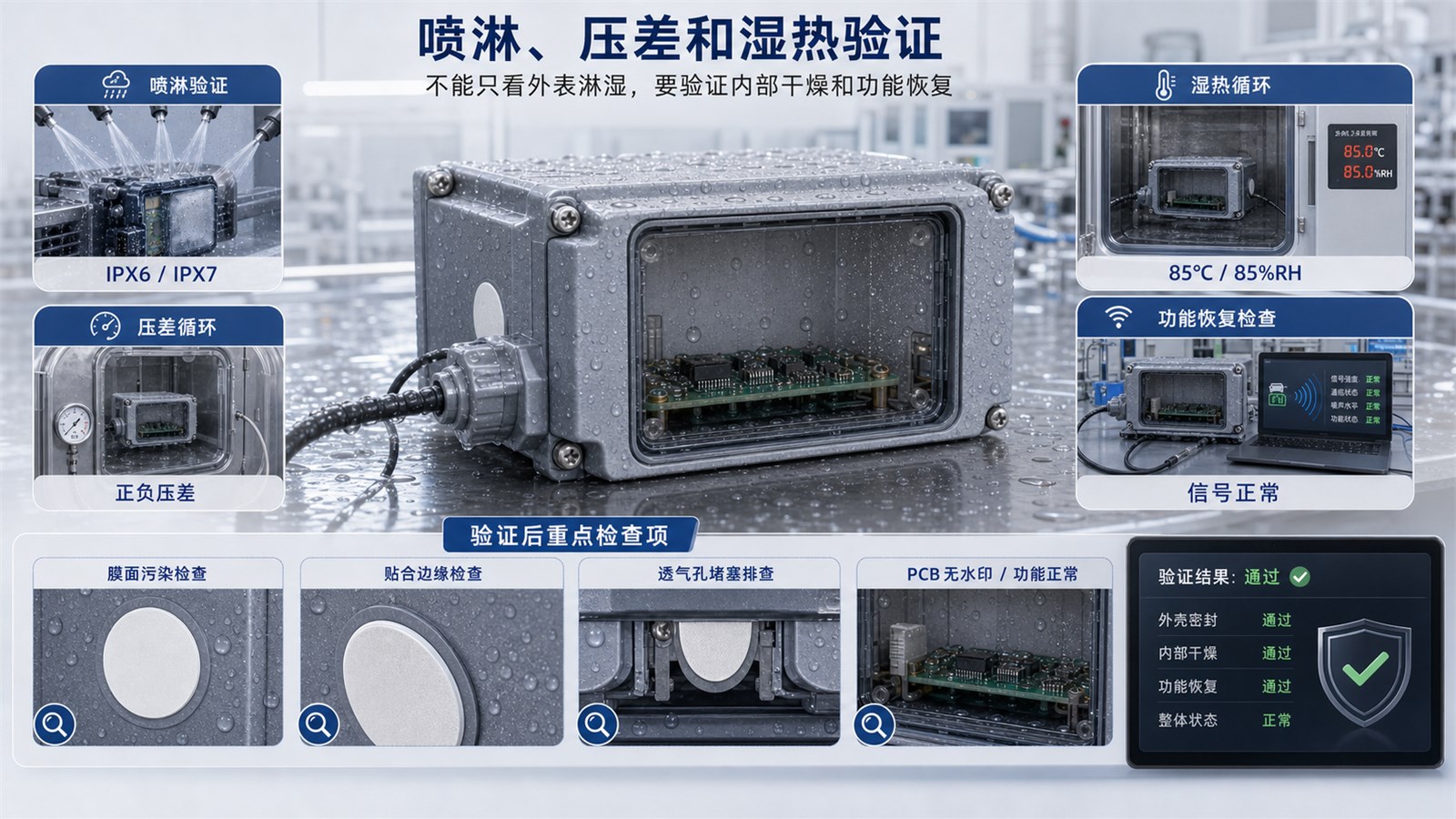
- Automotive and electric vehicles: Used in ECU housings, headlamp assemblies, battery packs, and sensor modules to achieve IP67, IP68, and IP69K ratings under vibration, thermal shock, and road contaminants.
- New energy systems: Critical for lithium-ion battery enclosures and solar inverters, preventing moisture ingress while managing internal gas pressure.
- Medical devices: Enables sterile venting in filtration assemblies and diagnostic equipment requiring consistent airflow and biocompatibility.
- Outdoor and rugged equipment: Protects portable electronics, wearable devices, and instrumentation exposed to rain, dust, and altitude changes.
In each case, properly engineered ePTFE vents extend product lifespan by eliminating seal stress and internal condensation.
Advantages of Choosing ePTFE Membrane Solutions
The primary benefit is reliable long-term performance in harsh conditions. By continuously equalizing pressure, ePTFE membranes prevent gasket fatigue, seal failure, and premature component damage. Their chemical stability ensures consistent performance over years of service. Design flexibility allows membranes to be welded, laminated, or housed in custom vent plugs to meet exact airflow and protection requirements. Compliance with international standards is simplified through certified materials and testing data.
Quality Assurance and Expertise You Can Trust
Spider(Xiamen) Technology Co., Ltd has specialized in ePTFE membranes and high-performance protective breathable products since 2016—more than ten years of focused expertise. All solutions are produced under ISO 9001 and IATF 16949 quality management systems and backed by third-party certifications including SGS, CE, UL, PFOA-Free, RoHS, and REACH. Our products are currently supplied to customers across Europe, the United States, Germany, Korea, Japan, India, Russia, Turkey, and additional markets, serving more than 1,000 global enterprises with customized protective venting solutions.
We operate under the guiding principle of “Integrity builds quality, innovation leads the future,” balancing technical excellence with environmental responsibility and sustainable manufacturing practices.
Selecting the Right ePTFE Membrane for Your Application
When evaluating ePTFE solutions, consider required airflow rate, pore-size distribution, operating temperature, chemical exposure, and target IP rating. Early collaboration with an experienced manufacturer helps optimize membrane thickness, lamination, and housing geometry for your specific needs.
For technical consultation, custom solution development, or detailed performance data, please contact our team at weitaiyan@spider-amoy.com.
By SST R&D Engineering Team, Spider(Xiamen) Technology Co., Ltd.