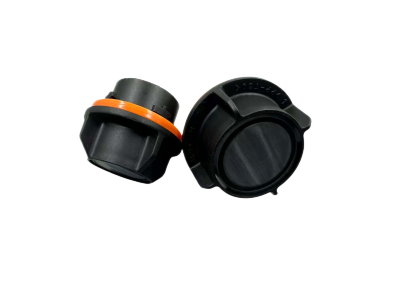
In the automotive industry, LED headlights have become the standard due to their energy efficiency, longevity, and superior illumination. However, their lower operating temperatures compared to traditional halogen bulbs introduce specific challenges related to internal fogging and moisture accumulation.
The Root Cause: Pressure Differentials and Condensation
Rapid temperature changes—from hot operation to cold ambient conditions, or during car washes and rain—create pressure differences inside the sealed headlight housing. Without proper venting, this can lead to seal stress, potential leaks, or condensation on the lens interior, reducing visibility and potentially causing electrical issues over time. LED lights exacerbate this because they produce less heat, meaning any condensation takes longer to evaporate naturally.
The Role of Protective Breathable Vents
Protective vents with breathable membranes address this by allowing air and water vapor to pass through for pressure equalization and moisture management, while blocking liquid water, dust, and other contaminants. This maintains the integrity of the IP rating and prevents fogging.
ePTFE Microporous Membrane: Advanced Material Science
Expanded polytetrafluoroethylene (ePTFE) membranes feature a unique node-and-fibril microstructure with precisely controlled pores typically in the 0.1–0.5 μm range. This structure provides excellent hydrophobicity and, in many formulations, oleophobicity. It permits high air permeability for effective pressure equalization while offering high water entry pressure to prevent ingress.
Limitations of Traditional Vent Materials
Traditional alternatives include microporous polyethylene (PE), sintered PTFE, coated non-woven fabrics, and sintered metal filters. While they may offer initial cost advantages or specific strengths, they often involve trade-offs in performance:
- Microporous PE offers good breathability but has limited temperature range (-40 to +80°C), moderate chemical resistance, poor oleophobicity, and shorter service life (3–5 years), struggling to maintain high IP ratings under thermal cycling.
- Sintered PTFE provides good chemical and thermal stability but features larger, less uniform pores, resulting in moderate air permeability and challenges achieving the highest IP ratings like IP69K.
- Coated non-woven fabrics are low-cost with high initial airflow but degrade under UV, chemicals, or high-pressure washing, limiting them to lower IP ratings (IP54–IP65) and shorter durability (2–4 years).
- Sintered metal filters deliver mechanical strength and high temperature capability but have lower permeability and poor oleophobicity, often requiring larger vent areas.

Performance Comparison in Automotive Conditions
For automotive LED lighting, sustained performance under harsh conditions—thermal cycling, chemical exposure from road salts and oils, high-pressure cleaning, and long-term durability—is critical. ePTFE consistently delivers excellent waterproofing and dustproofing (supporting IP67 to IP69K), superior air permeability, chemical inertness, wide temperature tolerance (-200 to +260°C), excellent oleophobicity, and long-term durability exceeding 10 years. These attributes make it the preferred choice for reliable, fog-free performance.
Practical Benefits for Engineers and Manufacturers
Selecting the right venting solution helps reduce warranty claims, extend product lifespan, ensure consistent light output and safety, and maintain compliance with stringent automotive standards. Real-world applications in headlights, taillights, and other lighting components demonstrate improved reliability when using high-performance ePTFE vents.
Spider(Xiamen) Technology Co., Ltd: 10+ Years of Specialized Expertise
Since 2016, Spider(Xiamen) Technology Co., Ltd has specialized in ePTFE membranes and high-performance protective breathable products for over 10 years. Our professional R&D team—composed of polymer material specialists with master’s and doctoral degrees—invests 5%-20% of annual revenue into innovation to push material performance boundaries. We hold ISO9001 and IATF16949 certifications and can provide comprehensive third-party reports including SGS, CE, UL, PFOA-Free, RoHS, and REACH. Our solutions serve the automotive, electronics, new energy, and other sectors, with products exported to Europe, the United States, Germany, Korea, Japan, India, Russia, Turkey, and beyond, supporting over 1,000 global enterprises. Guided by the principle “Integrity forges quality, innovation leads the future,” we balance economic benefits with social responsibility and environmental protection.
For technical consultation, product customization, or detailed test reports tailored to your automotive LED lighting needs, contact our team at weitaiyan@spider-amoy.com.
Conclusion
Understanding the technical differences between ePTFE breathable membranes and traditional materials empowers automotive engineers and procurement teams to select venting solutions that truly solve fogging and moisture challenges. The result is clearer optics, higher reliability, and better long-term performance in real-world driving conditions.
By SST R&D Engineering Team, Spider(Xiamen) Technology Co., Ltd.