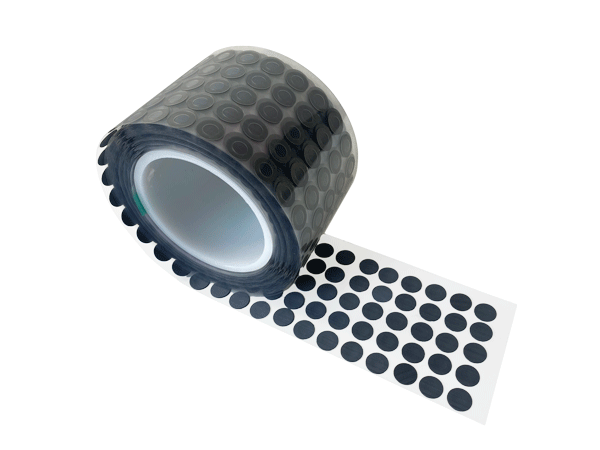
PTFE vs ePTFE: Why ePTFE Excels for Breathable Protection

Understanding PTFE and ePTFE: Fundamental Differences

Polytetrafluoroethylene (PTFE), widely known as Teflon®, is a dense fluoropolymer valued for its chemical inertness, thermal stability, and non-stick properties. In its standard form, PTFE is completely solid and non-porous, offering excellent barrier performance but zero permeability to air or water vapor.

Expanded polytetrafluoroethylene (ePTFE) is produced by a precisely controlled stretching process applied to PTFE resin at high temperature. This expansion creates a highly porous membrane with a distinctive node-and-fibril microstructure, achieving porosity levels typically between 70 % and 90 %. The result is a material that retains PTFE’s core advantages while adding controlled permeability.

Key Structural Differences Between PTFE and ePTFE

Scanning electron microscope comparison of solid PTFE versus microporous ePTFE node-and-fibril structure for breathable waterproof applications

The decisive distinction lies in microstructure. Solid PTFE consists of tightly packed molecular chains with no intentional voids, resulting in impermeability to both liquids and gases. In contrast, ePTFE contains billions of microscopic pores per square centimeter. These pores are sized in the sub-micron to low-micron range—small enough to repel liquid water droplets through surface tension while remaining large enough for water vapor and air molecules to pass freely.

Why ePTFE is Superior for Waterproof and Breathable Applications

In real-world protective scenarios, waterproofing alone is rarely sufficient. Enclosures exposed to temperature swings, altitude changes, or humidity must also manage internal pressure and moisture vapor to prevent condensation, seal deformation, or component failure. Solid PTFE barriers trap vapor and pressure differentials, often leading to premature degradation. ePTFE membranes solve this challenge by enabling rapid pressure equalization and continuous vapor transmission while blocking liquid water and particulates, delivering true IP67, IP68, or IP69K-level protection without compromising long-term reliability.

Technical Advantages of ePTFE Membranes

ePTFE preserves all inherent PTFE benefits—wide operating temperature range (–200 °C to +260 °C), exceptional chemical and UV resistance, hydrophobicity, and low dielectric constant—while adding measurable air-flow rates and low pressure-drop characteristics. The material remains flexible, can be laminated, welded, or mechanically fixed, and is easily engineered into custom vents, covers, or protective films tailored to specific device geometries.

Real-World Benefits in Demanding Environments

Engineers in automotive electronics, renewable energy systems, outdoor equipment, medical devices, and industrial sensors consistently choose ePTFE when both ingress protection and breathability are required. In ADAS radar modules, for example, ePTFE vents prevent internal fogging and pressure-induced seal stress during high-pressure washing or rapid thermal cycling, directly improving system accuracy and service life.

Spider(Xiamen) Technology’s Expertise in ePTFE Solutions

Since its founding in 2016, Spider(Xiamen) Technology Co., Ltd has specialized in ePTFE membranes and high-performance breathable protective products for more than ten years. Our IATF 16949- and ISO 9001-certified manufacturing, combined with a dedicated R&D team of master’s- and doctoral-level polymer scientists, ensures consistent quality and ongoing innovation. Each year we invest 5 %–20 % of revenue into material science advancements, refining pore structure, adhesion methods, and application-specific performance. Products have been successfully supplied to more than 1 000 enterprises across Europe, the United States, Germany, Korea, Japan, India, Russia, and Turkey, always guided by our core principle: “Integrity builds quality, innovation leads the future.” All solutions are backed by third-party certifications including SGS, CE, UL, PFOA-Free, RoHS, and REACH.

For technical consultation, custom membrane design, or application-specific validation, please contact us at weitaiyan@spider-amoy.com.

Conclusion

While standard PTFE remains an excellent choice for non-porous seals, coatings, and chemical barriers, ePTFE’s engineered microporous structure makes it the clear superior material whenever waterproof protection must coexist with breathability. This unique balance of impermeability to liquids and permeability to gases delivers measurable improvements in product reliability, service life, and design flexibility across critical industries.

By SST R&D Engineering Team, Spider(Xiamen) Technology Co., Ltd.