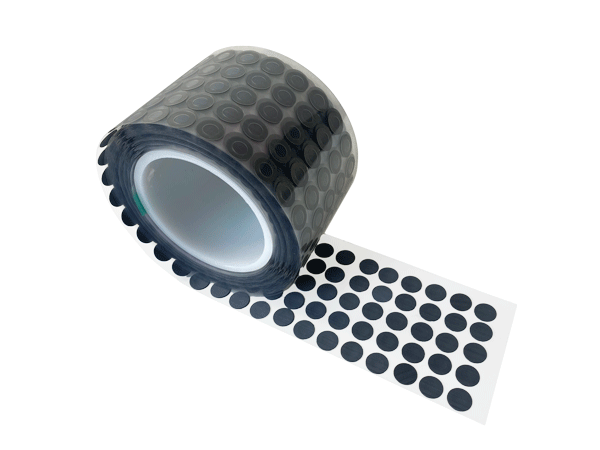
Engineers in electronics, automotive, new energy, outdoor equipment, and medical device sectors often face a common challenge: enclosures must withstand water, dust, and harsh conditions while maintaining internal pressure balance and allowing vapor to escape. Without effective venting, temperature fluctuations or altitude changes can cause seal failure, condensation, or component damage. ePTFE microporous membranes solve this by combining high-level protection with controlled permeability.
What Is ePTFE Microporous Membrane?
ePTFE, or expanded polytetrafluoroethylene, is a specialized form of PTFE created through a controlled stretching process. This expansion transforms the dense material into a highly porous membrane with a unique node-and-fibril microstructure. The result is billions of microscopic pores per square centimeter, delivering performance that standard materials cannot match. Since 2016, Spider(Xiamen) Technology Co., Ltd has focused exclusively on ePTFE membranes and high-performance protective breathable products, accumulating more than 10 years of hands-on expertise in this field.
The Unique Microporous Structure
The membrane’s performance stems from its precisely engineered pores, typically ranging from 0.1 to 0.5 micrometers in diameter. These pores are formed by interconnected fibrils and nodes during the expansion process. The structure is inherently hydrophobic due to PTFE’s extremely low surface energy, meaning water and most liquids bead up rather than penetrate. At the same time, the pores remain large enough for gas molecules and water vapor to pass through freely. This combination of size-selective filtration and surface chemistry is what enables simultaneous waterproofing, dustproofing, breathability, and pressure equalization.
How Waterproofing Works

Waterproof performance relies on two factors: pore size and hydrophobicity. Liquid water droplets are typically 20 micrometers or larger—orders of magnitude bigger than the membrane’s pores. Surface tension prevents the droplets from entering or spreading into the pores. Even under high-pressure conditions (such as IP67, IP68, or IP69K testing), the membrane maintains an effective barrier. Real-world validation through standardized tests, including those covered by SGS, CE, UL, and other reports, confirms consistent waterproof integrity without compromising the enclosure.
Dustproof Mechanism
Dust and particulate protection follows the same size-exclusion principle. Fine dust particles, pollen, and many industrial contaminants exceed the pore diameter and are blocked at the surface. The membrane acts as a high-efficiency filter while still permitting air exchange. This capability supports demanding IP ratings and protects sensitive electronics or mechanical components from abrasion, short circuits, or contamination in dusty environments.
Breathability and Vapor Transmission
Breathability occurs because water vapor molecules (approximately 0.0004 micrometers) are far smaller than the pores. Air and vapor flow freely through the membrane, allowing moisture generated inside an enclosure—due to temperature cycling or component operation—to escape. This prevents internal condensation, fogging, or corrosion. The high air permeability also supports rapid equalization of humidity without sacrificing protection.
Pressure Balancing Function
Pressure differentials arise from temperature changes, altitude variations, or rapid environmental shifts. Without venting, these differentials can stress seals, deform housings, or cause vacuum/positive pressure that pulls contaminants past gaskets. The ePTFE membrane’s open pore network allows air to flow in or out instantly, maintaining near-zero differential pressure. This venting action preserves seal integrity and extends product life in applications ranging from automotive sensors to medical equipment.
Practical Applications Across Industries
In electronics and automotive systems, ePTFE vents protect sensitive circuitry and sensors from moisture and dust while allowing heat dissipation. New energy battery enclosures use these membranes to manage internal pressure during charge-discharge cycles. Outdoor equipment benefits from reliable waterproofing combined with breathability to avoid internal fogging. Medical devices rely on the same technology for sterile yet pressure-equalized housings. Across these sectors, the membrane enables designs that meet stringent IP67, IP68, and IP69K requirements without sacrificing functionality.
Why Deep Expertise Matters in ePTFE Solutions
Selecting the right membrane involves more than pore size—it requires understanding material behavior under real operating conditions, long-term durability, and compliance with international standards. Spider(Xiamen) Technology Co., Ltd operates an ISO9001- and IATF16949-certified quality system and provides comprehensive third-party reports including SGS, CE, UL, PFOA-Free, RoHS, and REACH. Our products are already trusted by more than 1,000 enterprises across Europe, the United States, Germany, Korea, Japan, India, Russia, Turkey, and beyond. A dedicated R&D team of master’s- and doctoral-level polymer specialists invests 5 %–20 % of annual revenue into continuous innovation, pushing the boundaries of material performance to deliver practical, reliable solutions. This approach reflects our core belief: integrity builds quality, innovation leads the future.
For technical consultation, custom venting solutions, or application-specific recommendations, please contact us at weitaiyan@spider-amoy.com.
By SST R&D Engineering Team, Spider(Xiamen) Technology Co., Ltd.